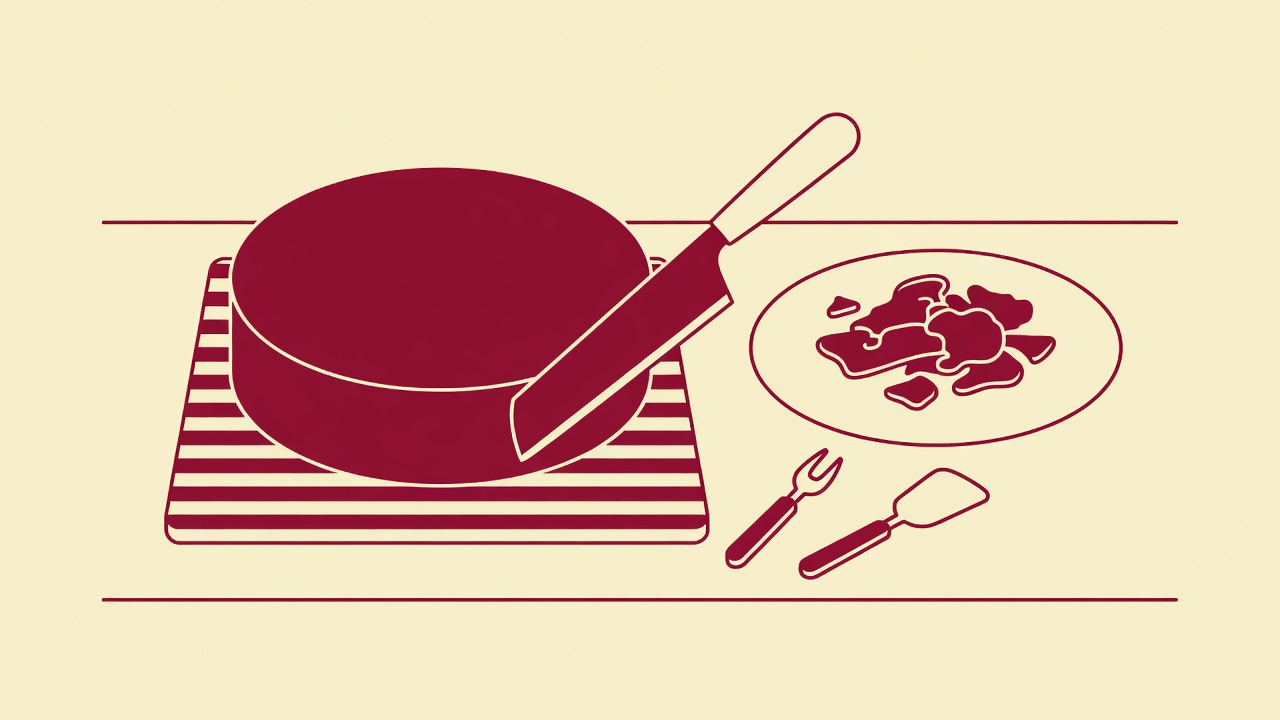
The counter makes technique visible
A compact cheese counter turns preparation into a readable sequence. A server heats a surface, judges its readiness, scrapes or portions the cheese and sends it directly to the guest. The appeal is not simply theatre. Short distances between equipment and plate can help preserve the texture the kitchen intends. Diners also gain a natural opportunity to ask about the wheel, its producer and its place in the meal.
Raclette is a useful example because the service method is central to the experience. Heating part of a wheel and scraping the softened surface differs from melting slices in individual pans. Both can produce an enjoyable meal, but they create different rhythms. A menu should tell you which format to expect. If you are booking for conversation, also consider whether a narrow counter, nearby equipment and continual interaction suit your group.
The shared pot creates a common pace
Cheese fondue brings diners around one preparation. Bread, a warm pot and shared attention create a sociable structure, but the apparent simplicity depends on careful kitchen work. Cheese selection, liquid, acidity and heat management influence the mixture. A restaurant may use wine, another liquid or a recipe designed without alcohol. These choices deserve clear explanation, especially when alcohol avoidance or an allergy is part of the booking.
A shared format also creates practical questions. Does everyone need to order the same recipe? Is there a minimum group size? Can a guest who cannot eat the fondue order a complete alternative? Good service resolves these issues before the burner arrives. It should explain equipment and safe handling without burdening guests with a performance. Participation is enjoyable when the task is clear and the table has enough room.
Small plates can widen the conversation
A contemporary kitchen can make cheese the centre of its identity without offering a large melted main course. Fresh curd with seasonal vegetables, a broth enriched with whey, a baked preparation or a restrained portion of aged cheese can form a flexible menu. This approach allows contrast between temperatures and textures. It also gives diners more control over how much richness they want in one sitting.
There is a risk, however, that “small plates” becomes an excuse for an unclear meal. If every dish is salty, creamy and served with bread, the selection may feel repetitive despite its variety of names. Look for a menu that includes fresh, bitter, acidic or broth-based elements. Ask how many plates the kitchen recommends for a meal and which combinations avoid repeating essentially the same texture.
The tasting sequence needs a clear argument
In a tasting menu, dairy can appear as a seasoning, a sauce, a texture or a main ingredient. Cultured cream and aged cheese do not need to occupy the same register. The best conceptual question is whether each appearance adds something distinct. A sequence should not rely on repeated melted-cheese sensations merely because every course has a different garnish or an elaborate description.
Ask whether the advertised cheese course is an addition to an already dairy-heavy menu. Check the total structure, the approximate duration and how substitutions work. A restaurant may be able to remove one cheese garnish but unable to redesign a sequence built around milk. Early communication is fairer to both diner and kitchen than asking for a fundamental change after the first course has arrived.
Regional references should remain legible
Tartiflette, associated with Savoie and commonly made with Reblochon, is not another word for fondue. Pizzoccheri from Valtellina combines buckwheat pasta with ingredients that commonly include potatoes, greens, cheese and butter. Kässpätzle belongs to a different family of noodle-based preparations. These examples show how dairy can organize a meal without sharing one technique. Contemporary interpretation is easier to understand when the original reference remains visible.
A menu may borrow across regions, and that is not automatically a problem. What matters is whether it names an adaptation honestly. A kitchen in Helsinki can interpret an Alpine service idea without pretending to be a mountain farm. Look for a coherent account of sourcing and technique, not an impossible demand that every object, ingredient and member of staff originate in the same valley.
Service is part of the ingredient
The cheese continues to change after it leaves storage. Temperature, exposure and time on a plate influence aroma and texture. A thoughtful service format accounts for that movement. Smaller repeated servings may make more sense than one oversized plate; conversely, constant interruptions may undermine a relaxed shared meal. Neither approach is inherently superior. The right choice depends on what the restaurant promises and how you want to spend the evening.
Before booking, describe the experience you want: an informal shared meal, a short counter visit or an extended tasting. Ask the restaurant to explain its format in plain language. If the explanation tells you how you will sit, order and eat, it is more useful than a paragraph of vague claims about reinvention.