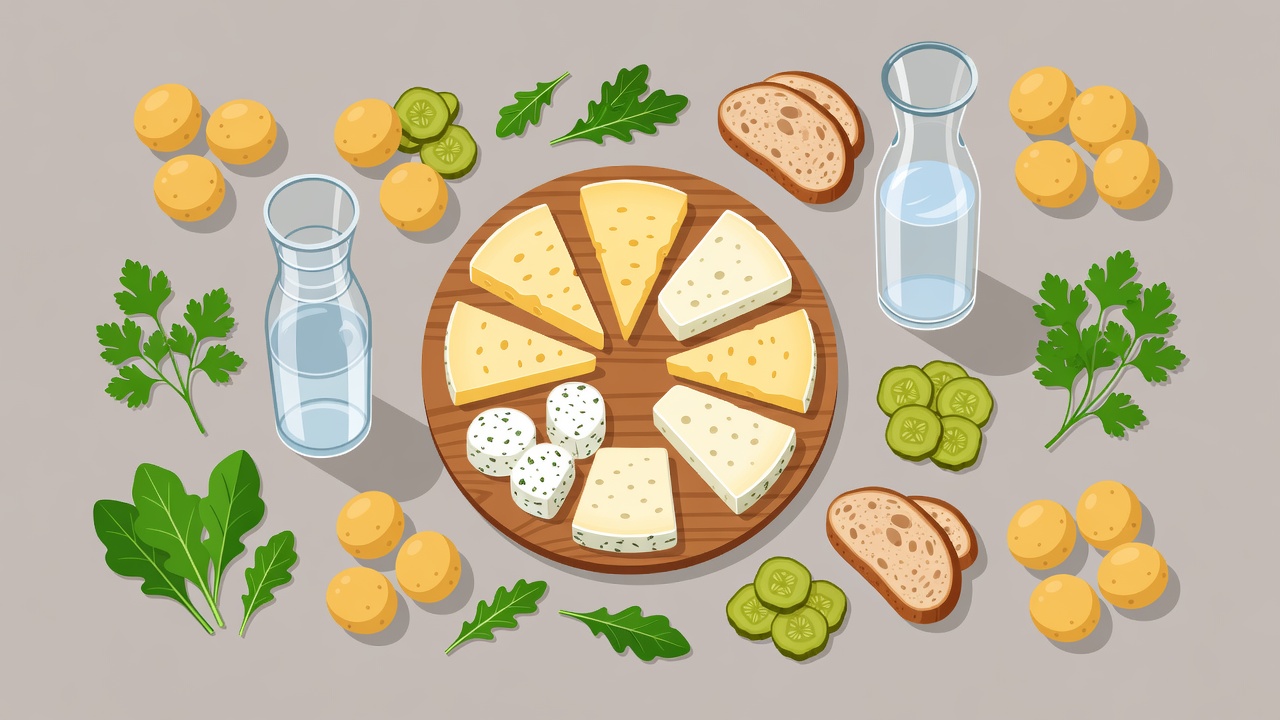
Give the meal one clear centre
Start by deciding what kind of appetite you are bringing to the restaurant. A fondue main course, a set of dairy-led small plates and a cheese selection after dinner ask different things of the table. Ordering all three can be enjoyable for some groups, but it should be a deliberate choice rather than the result of treating every appealing item as a necessary introduction to the concept.
If a melted dish is the centrepiece, let the earlier course create contrast. A vegetable preparation, a clear broth or a modest salad can establish a different register. If you prefer a sequence of small plates, choose across cooking methods rather than simply across cheese names. A baked cheese dish followed by a creamy gratin may repeat more than a menu’s language initially suggests.
Understand what a portion includes
Menus can describe a portion per person, per vessel or per table. The same wording may also hide different assumptions about bread, potatoes and additional servings. Ask what arrives with the dish and whether accompaniments are replenished. This is not only a question of value; it affects how much to order and whether everyone at the table can construct a complete meal.
A tasting portion is not a standardized measure. Neither is a restaurant cheese board. Instead of looking for a universal gram count, describe your intended meal and ask the server how the kitchen sizes its dishes. A clear answer should distinguish a snack, a main course and an optional final selection. It should also explain any shared-order requirements before you commit.
Acidity and bitterness have work to do
Pickles offer acidity and crunch against warm cheese. Bitter leaves bring a different contrast, while simply prepared vegetables can vary texture without adding another rich sauce. These are sensory relationships, not claims that an accompaniment cancels out the meal’s nutritional content. Choose them because they make the next mouthful interesting, not because they supposedly make unlimited cheese consequence-free.
Sweet accompaniments deserve the same attention. A restrained fruit preparation can support a cheese, but several jams, sweet breads and sweet drinks may obscure differences between samples. If the purpose is comparison, begin with a plain bite. Add an accompaniment afterwards and notice what changes. There is no need to follow a rigid tasting ceremony; the point is to preserve choice.
Starch is structure, not an afterthought
Potatoes and bread can provide a relatively neutral foundation for a strongly flavoured cheese. Their form matters: boiled potatoes, toasted bread and a rich pastry each create a different balance. A dish that already includes butter, cream and pastry may need lighter accompaniments than a simple scraped-cheese plate. Read the entire preparation rather than judging richness from the cheese name alone.
Whole grains, beans or vegetables may appear in contemporary interpretations, though they are not universal substitutes for traditional sides. Ask what actually accompanies the dish rather than assuming the menu follows a familiar formula. Gluten-free diners should check bread, sauces, coatings and shared preparation areas; replacing one visible component does not establish that the whole meal meets their requirements.
Build a tasting through differences
For an uncooked cheese selection, contrast can come from milk type, moisture, rind treatment and maturity. Three genuinely different cheeses may teach you more than a crowded board of closely related examples. Ask for a short explanation of why the selection belongs together. A restaurant with a clear point of view should be able to discuss the choices without turning dinner into an examination.
Tasting from subtler to more assertive flavours is a useful starting strategy, not a compulsory ranking. Temperature and individual perception can change the order that feels right. Water and plain bread allow you to pause between samples. You do not have to finish every rind: some are edible, some are not intended for eating, and surface treatments should be explained when uncertain.
Choose drinks without folklore
Wine can be an enjoyable pairing, but it is not a requirement. Tea, water and carefully chosen alcohol-free drinks can accompany a cheese meal. Consider sweetness, acidity and intensity rather than assuming that any drink from a mountain region will suit every dish. Ask whether a proposed pairing includes alcohol, and remember that an alcohol-free drink does not change the ingredients in a wine-based fondue.
For dietary needs, specificity is essential. A low-lactose cheese remains a milk product. Vegetarian suitability depends partly on the coagulant, and a vegetable-looking dish may contain meat stock or animal rennet. A restaurant should answer these questions about the actual preparation. Where an allergy or medical concern is involved, use professional advice and direct kitchen confirmation rather than a general guide.